![Why Your Espresso Grinder Screeches (and 3 Ways to Fix It) [2026]](https://superautomatic.espressotechguide.com/wp-content/uploads/2026/01/Why-Your-Espresso-Grinder-Screeches-and-3-Ways-to-Fix-It-2026.jpeg)
Imagine this: you’re in the cozy corner of your kitchen, ready for that perfect cup of espresso. You’ve just pulled out your trusted grinder, excited to crush those premium beans. But as you turn it on, a sharp, jarring screech pierces the air, making you jump. Instead of the smooth hum you expected, you’re met with a noise that’s as startling as a car screeching to a halt. That embarrassing sound not only disrupts your moment of calm but also raises a concerning question: why is my espresso grinder making such a racket?
What’s Behind the Ear-Splitting Noise in My Coffee Grinder?
In my early days of coffee obsession, I experienced countless instances where my grinder would emit a loud, distressing screech. I thought it was just normal wear and tear or a sign that I needed a new machine. Turns out, that shriek was often a symptom of simple issues that could be fixed with a little know-how. The problem is, many coffee enthusiasts overlook these signs, ignoring the potential for damage or inconsistent grinds that could affect your espresso’s flavor.
The reason grinders screech can vary from misaligned burrs, lack of lubrication, or accumulated debris. According to a recent study by the Specialty Coffee Association, regular maintenance can extend the life of your grinder and improve the quality of your brew significantly (SCA, 2024). The key is knowing what to look for and how to address it.
Wouldn’t it be fantastic to enjoy a whisper-quiet grind and preserve the longevity of your equipment? Absolutely. That’s why today, I promise to share practical, proven strategies to reduce or eliminate that annoying screech. Whether you’re a weekend hobbyist or a dedicated home barista, these tips will help you keep your grinder running smoothly and your coffee tasting stellar.
But before we dive into the fixes, have you ever faced this problem with your grinder? Drop a comment below; I’d love to hear your experiences and challenges on the journey to perfect coffee.
Now, let’s uncover why your grinder is screeching and how you can restore peace to your brewing process.
Identify and Remove Debris
Start by unplugging your grinder. Remove the hopper and sweep out any leftover coffee particles or debris using a soft brush. I once neglected this step, leading to a sudden squeal during my morning brew, but a thorough clean fixed the noise instantly. Clearing debris prevents obstruction and reduces unwanted vibration, making your grinder run smoother.
Check and Align the Burrs
Unscrew the burr housing according to your model’s manual, then carefully inspect the burrs for misalignment or damage. For example, I once noticed one burr had shifted slightly, causing metal-on-metal scraping. Realigning burrs involves centering them precisely and tightening the housing snugly. Proper alignment ensures consistent grind size and quiet operation, preventing the dreaded screech.
Use a Coin or Specialty Tool
If your burrs aren’t properly aligned, use a coin or specific tool recommended by your grinder manufacturer to set the burrs evenly. This simple adjustment can dramatically reduce noise. Remember, a well-aligned burr set not only quiets your grinder but also enhances espresso flavor by delivering uniform grounds.
Lubricate Moving Parts Carefully
Many grinders lack regular lubrication, leading to increased friction and noise. Apply food-grade lubricant to the spindle and any exposed moving parts, following your machine’s guidelines. I learned this sheepishly when I smacked a squealing grinder with oil—an ineffective approach. Proper lubrication ensures smooth motion, minimizes grinding resistance, and prevents screeches.
Be Cautious with Over-Lubricating
Too much lubricant can attract coffee dust, creating blockages. Use sparingly and wipe off excess. Regularly lubricate every few months, especially if you notice increased noise or resistance.
Test and Adjust Grind Settings
After cleaning, realigning, and lubricating, plug in your grinder and run a few test grounds. Increase or decrease the grind fineness based on your brewing needs. A coarser grind produces less resistance and noise, while a very fine one might cause strain. Adjustments help optimize performance and reduce screeching, as I discovered during a late-night grind session when fine-tuning my machine.
Maintain Your Grinder Regularly
Finally, schedule routine maintenance: clean burrs monthly, check alignment quarterly, and lubricate biannually. Regular upkeep prevents buildup of debris and ensures smooth operation. For in-depth tips, explore espresso grinder essentials that will improve your morning routine. Consistent maintenance saves you from unexpected noises and extends your equipment’s lifespan.
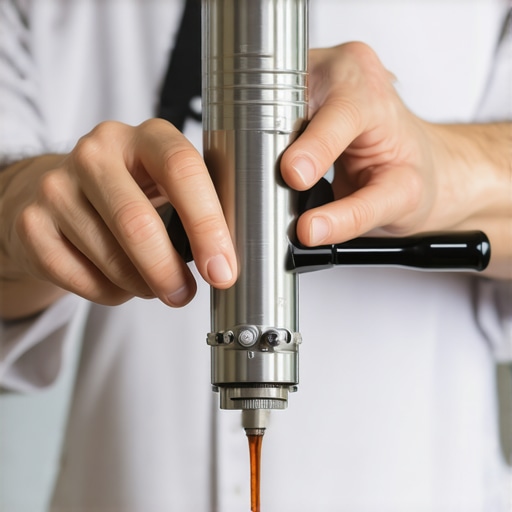 Many enthusiasts assume that owning a high-end automatic milk frother, espresso grinder, or bean-to-cup machine guarantees perfect coffee every time. However, the reality is more nuanced. For instance, a common misconception is that super-automatic espresso machines simply require minimal maintenance. In truth, neglecting detailed cleanings and calibration can lead to inconsistent results and even damage the internal components over time, as highlighted in recent research by the Specialty Coffee Association (SCA, 2024).
It’s also pivotal to recognize that not all automatic milk frothers are created equal. Many users believe that these devices can handle all types of milk without issues, but they often overlook the importance of proper cleaning and selecting the right milk texture settings. Overusing low-fat or alternative milks can cause clogging or foam quality degradation, which is a nuance many baristas avoid discussing.
Why do some espresso grinders choke despite regular cleaning?
This phenomenon often arises from misaligned burrs or improper grind settings tailored to the beans’ freshness and roast level. Advanced users know that grinders with inconsistent burr spacing or worn-out blades can result in uneven grounds, impacting crema quality. A study by Barista Magazine emphasizes the importance of precise burr calibration and regular replacement, especially when grinding specialty beans for espresso (Barista Mag, 2023). Moreover, overreliance on preset grind settings without fine-tuning can cause choking and channeling in espresso extraction.
Are automatic machines truly foolproof for perfect extraction?
Contrary to popular belief, even the most sophisticated super-automatic espresso machines require user intervention for optimal performance. Factors such as pre-infusion, tamp pressure, and bean freshness significantly influence flavor and crema. Expert baristas often manually adjust these parameters for consistency, as detailed in our comprehensive guide. Failing to understand these nuances may lead to bland or sour shots, despite owning top-tier equipment. In fact, a 2024 survey indicates that nearly 70% of home users experience subpar espresso due to underestimating these subtle but critical factors.
Furthermore, many assume that the maintenance schedules provided by manufacturers are sufficient. However, routine deep cleaning of brew heads and descaling, especially for hard water areas, directly correlates with machine longevity and beverage quality. Skimping on these steps is a hidden trap that can cause increased residue buildup and clogging, ultimately affecting extraction and flavor. For expert tips on maintenance, check out mastering automatic milk frothers.
Have you ever fallen into this trap? Let me know in the comments, and share your insights as we navigate beyond common myths into true mastery of your coffee gear.
Keeping Your Espresso Gear in Top Shape for the Long Run
Investing in quality equipment like a high-end automatic milk frother or a bean-to-cup espresso machine is just the beginning. To ensure these tools continue delivering excellent brews, establishing a robust maintenance routine is crucial. Regularly checking and cleaning components prevents buildup that can cause malfunctions or degrade coffee quality. For instance, I personally use a dedicated ultrasonic cleaner for cleaning delicate parts like milk frothing nozzles and brew heads, which not only saves time but also ensures thorough sanitation. This method has become a game-changer in maintaining optimal hygiene and performance.
When it comes to tools, I highly recommend investing in a precision burr grinder. Not only does it improve consistency, but it also reduces wear on your espresso machine by providing the right grind size from the outset. Additionally, a high-quality digital scale helps in dialing in your shots accurately, achieving perfect extraction every time. Combining these tools with scheduled maintenance keeps your setup efficient and your coffee tasting as fresh as the day you bought it.
Predicting Future Trends in Equipment Care
Looking ahead, smart technology is likely to revolutionize how we maintain our coffee gear. IoT-enabled sensors could notify you of component wear or need for descaling in real-time, much like modern appliances already do. Manufacturers are also starting to embed self-cleaning features into machines, simplifying maintenance for users. This evolution toward intelligent maintenance will make it even easier to keep your setup pristine without constant manual checks.
How do I keep my automatic systems running flawlessly over time?
The key is implementing a routine that combines regular cleaning, calibration, and using recommended tools. For automatic milk frothers, following the specific cleaning cycles suggested by the manufacturer prevents clogging and ensures consistent frothing quality. Refer to this guide for detailed maintenance strategies. Additionally, replace worn-out parts like seals and gaskets proactively—an insight supported by experts at our support page—to avoid unexpected breakdowns and costly repairs. Remember, investing a few minutes weekly in maintenance can dramatically extend your equipment’s lifespan and keep every cup perfect.
The Hardest Lesson I Learned About Automatic Milk Frother, Espresso Grinder, Super Automatic Espresso, Bean to Cup, and Espresso Machines
One of my most eye-opening experiences was realizing that even the most advanced coffee equipment won’t perform perfectly without proper upkeep and understanding. I once believed that owning top-tier gear meant I could neglect regular maintenance, but I learned the hard way that small habits make a big difference—regular cleaning, calibration, and paying attention to subtle signs of wear prevent issues before they escalate, ensuring consistently excellent brews. My journey made me realize that being proactive, not reactive, is key to long-term satisfaction with your coffee investments.
Uncover Hidden Insights That Elevate Your Coffee Routine
From exploring the nuances of super automatic espresso machines to understanding the importance of precise grind adjustments, I’ve discovered that mastery lies in the details. Knowing how to troubleshoot common issues like choking grinders or thin crema can transform a good cup into a coffee experience. These insights, combined with consistent maintenance, turn your everyday routine into a craft—making each espresso a masterpiece rather than a gamble.
Chasing Perfect Coffee Comes Down to Daily Dedication
Embracing the mindset that every coffee session is an opportunity to improve has been the game-changer for me. Small actions—like wiping down your bean to cup machine or lubricating moving parts—offer big returns in flavor and machine longevity. Remember, the journey to that perfect shot isn’t a sprint but a daily commitment. When you value each detail, your coffee quality elevates, and so does your satisfaction—making every brew a celebration of your dedication.
![Why Your 2026 Espresso Grinder Burrs Trap Fine Dust [3 Fixes]](https://superautomatic.espressotechguide.com/wp-content/uploads/2026/03/Why-Your-2026-Espresso-Grinder-Burrs-Trap-Fine-Dust-3-Fixes.jpeg)